
Tuesday, May 5, 2026
Change Oracle Logo
  • Climate Change
    • Greenhouse Gas Emissions
    • Biodiversity
    • Extreme Weather
  • Energy
    • Renewables
    • Nuclear Power
    • Fossil Fuels
  • Politics
    • American Politics
    • Canadian Politics
    • International Politics
  • Social Change
    • Activism
    • Disinformation
    • Education
    • Psychology
    • Gender Equality
  • Business and Economics
    • Leadership
    • Decarbonization
    • Economics
    • Supply Chains
    • Investing
  • Technology
    • Carbon Removal
    • Carbon Capture
    • Transportation
    • Buildings & Infrastructure
    • Food
  • Polycrisis
No Result
View All Result
  • Climate Change
    • Greenhouse Gas Emissions
    • Biodiversity
    • Extreme Weather
  • Energy
    • Renewables
    • Nuclear Power
    • Fossil Fuels
  • Politics
    • American Politics
    • Canadian Politics
    • International Politics
  • Social Change
    • Activism
    • Disinformation
    • Education
    • Psychology
    • Gender Equality
  • Business and Economics
    • Leadership
    • Decarbonization
    • Economics
    • Supply Chains
    • Investing
  • Technology
    • Carbon Removal
    • Carbon Capture
    • Transportation
    • Buildings & Infrastructure
    • Food
  • Polycrisis
No Result
View All Result
Change Oracle Logo
No Result
View All Result
Home Other

Trust Building at the Bonn Climate Talks

by Change Oracle
June 15, 2015
in Other
0

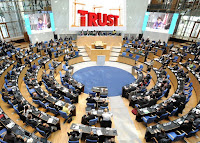
The 2015 Bonn climate talks wrapped on Thursday June 11 and while some decried the absence of tangible results others optimistically pointed to an increased atmosphere of trust.

Negotiators worked on a draft of the global climate agreement that is expected to be finalized at COP21 in Paris at the end of the year. Our fate and the fate of future generations will be decided by this document.

The scope of cooperation required is unprecedented as is challenge of climate change. Failure to find consensus will likely mean that temperatures will rise well above the internationally agreed upon upper threshold limit of 2 degrees Celsius, while success will increase our chances of securing a sustainable future.

After ten days of talks negotiators were only able to reduce the size of the working draft from 90 pages to 85. This is around three times the size of the final draft which is expected to be no more than 20 or 30 pages. However, they did agree on a plan to consolidate the text further and provide more structure.

Even though there were no headline stealing achievements at the Bonn talks there was some movement on trust building. This has been singled out as an important issue that will go a long way towards laying the foundation of an eventual agreement. “There are three conditions to deliver a successful agreement in Paris: the first one is trust, the second one is trust, and the third one is trust . . . and that, I think, we have gained a lot,” explained by Laurence Tubiana, France’s ambassador for the climate negotiations

The key to any final outcome is a substantial reduction in global of carbon emissions. Finding ways of reducing our consumption of fossil fuels and advancing the growth of renewable sources of energy are central to this ambition. Other major issues concern adapting to extreme weather and climate finance.

Many of the impediments to progress involve the precise wording of the document. This may seem like minutia but the inclusion or exclusion of words like “differentiated” will have a major impact on the eventual outcome. Developing nations, including China, the world largest GHG emitter, want to include the word, but the US and others want to exclude it. In essence its inclusion would reduce the climate mitigation burden of developing nations while its exclusion would increase their responsibilities.

This is an undeniably complex and technically daunting challenge, but our efforts must equal our need to craft an agreement. A new draft that will form the legal basis of the final document is expected by July 24. The next round of climate talks are scheduled for August and the final round begins on November 30th, 2015.


Discover more from Change Oracle

Subscribe to get the latest posts sent to your email.

Share
Previous Post

Seminar – Carbon Capture and Storage in the UK

Next Post

Climate Risks are a Systemic Strategic Concern for Investors

Change Oracle

Change Oracle

Richard Matthews is a researcher, writer, journalist, consultant, and change activist. He has published thousands of articles and contributed to reports for policymakers including a United Nations Environment Program (UNEP) publication. His critical, interdisciplinary analyses have been cited by a wide array of academic publications. His research interests include carbon removal, nuclear power, and disinformation. He is currently spearheading Change Oracle’s Polycrisis Project (COPP).

Related Posts

Chainsaw Governance: What is Behind the Administration’s Purge of Federal Employees

by Change Oracle
May 4, 2026
0

The Trump administration has fired senior officials and hundreds of thousands of civil service employees throughout the government. This purge removed some of the most capable federal employees and replaced...

Feedback Loops and the Polycrisis: Interconnected Systems From Doom Loops to Virtuous Cycles

by Change Oracle
March 23, 2026
0

An ever-expanding web of feedback loops is converging to generate system-wide risks—collectively known as the polycrisis. The cascading effects of interconnected crises represent the collision of four deeply intertwined systems:...

Welcome to the Polycrisis: Earth’s Life-Support Systems Are Failing as We Cross Planetary Boundaries and Approach Climate Tipping Points

by Change Oracle
February 2, 2026
0

Listen as a podcast Earth’s life-support systems are failing.  Humanity is surpassing critical environmental thresholds and increasing the risk of triggering irreversible climate tipping points. It is hard to overstate...

Next Post

Climate Risks are a Systemic Strategic Concern for Investors

Leave a ReplyCancel reply

Subscribe on Substack

Follow Change Oracle

  • Spotify
  • Facebook
  • LinkedIn
  • YouTube
  • Instagram
  • TikTok
  • Email

Podcasts

Change Oracle’s Polycrisis Project

Feedback Loops and the Polycrisis: Interconnected Systems From Doom Loops to Virtuous Cycles

by Change Oracle
March 23, 2026
0

An ever-expanding web of feedback loops is converging to generate system-wide risks—collectively known as the polycrisis. The cascading effects of...

Read moreDetails

Welcome to the Polycrisis: Earth’s Life-Support Systems Are Failing as We Cross Planetary Boundaries and Approach Climate Tipping Points

February 2, 2026

The Best Good Environmental News Stories of 2025

January 12, 2026

Change Oracle on Substack

January 5, 2026

COP30: Another Climate Summit Undone by Fossil Fuels

December 8, 2025
  • About
  • Podcasts & Videos
  • Climate Change
  • Energy
  • Business and Economics
  • Politics
  • Technology
  • Social Change
  • Polycrisis
  • Other

© 2024 Copyright Change Oracle.

Welcome Back!

Login to your account below

Forgotten Password?

Retrieve your password

Please enter your username or email address to reset your password.

Log In
No Result
View All Result
  • Business and Economics
    • Leadership
    • Supply Chains
  • Economics
  • Energy
    • Renewables
    • Nuclear Power
    • Fossil Fuels
  • Climate Change
    • Greenhouse Gas Emissions
    • Biodiversity
    • Extreme Weather
  • Investing
  • Politics
    • American Politics
    • Canadian Politics
    • International Politics
  • Technology
    • Buildings & Infrastructure
    • Carbon Capture
    • Food
    • Transportation
  • Social Change
    • Education
    • Activism
    • Psychology

© 2024 Copyright Change Oracle.

Discover more from Change Oracle

Subscribe now to keep reading and get access to the full archive.

Continue reading

Discover more from Change Oracle

Subscribe now to keep reading and get access to the full archive.

Continue reading