
Saturday, March 7, 2026
Change Oracle Logo
  • Climate Change
    • Greenhouse Gas Emissions
    • Biodiversity
    • Extreme Weather
  • Energy
    • Renewables
    • Nuclear Power
    • Fossil Fuels
  • Politics
    • American Politics
    • Canadian Politics
    • International Politics
  • Social Change
    • Activism
    • Disinformation
    • Education
    • Psychology
    • Gender Equality
  • Business and Economics
    • Leadership
    • Decarbonization
    • Economics
    • Supply Chains
    • Investing
  • Technology
    • Carbon Removal
    • Carbon Capture
    • Transportation
    • Buildings & Infrastructure
    • Food
  • Polycrisis
No Result
View All Result
  • Climate Change
    • Greenhouse Gas Emissions
    • Biodiversity
    • Extreme Weather
  • Energy
    • Renewables
    • Nuclear Power
    • Fossil Fuels
  • Politics
    • American Politics
    • Canadian Politics
    • International Politics
  • Social Change
    • Activism
    • Disinformation
    • Education
    • Psychology
    • Gender Equality
  • Business and Economics
    • Leadership
    • Decarbonization
    • Economics
    • Supply Chains
    • Investing
  • Technology
    • Carbon Removal
    • Carbon Capture
    • Transportation
    • Buildings & Infrastructure
    • Food
  • Polycrisis
No Result
View All Result
Change Oracle Logo
No Result
View All Result
Home Technology Carbon Removal

Examples of Carbon Removal Technology

by Change Oracle
January 13, 2020
in Carbon Removal
0

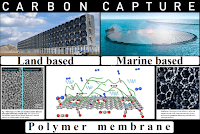
The need for a carbon removal portfolio (CRP) or negative emission technologies (NETs) is becoming increasingly apparent in the wake of our failure to draw down atmospheric CO2.  Natural Climate Solutions (NCS) is an approach to carbon removal that leverages naturally occurring phenomena like photosynthesis to harvest the CO2 from the air. Once harvested from the air or at the source where it is produced, carbon can be sequestered or it can be used in agricultural or industrial applications. Carbon can also be recycled and used to make synthetic fuel. In theory, this means that the same CO2 molecules could be used over and over again. Here are four examples of carbon capture technologies that may prove to be critical to our efforts to keep global temperatures from rising above the upper threshold limits. The first two suck carbon out of the air or water and the other two are used at source to capture carbon emissions.

Land-based

Direct air capture plants could involve banks of fans blowing air through a carbon dioxide (CO2) capturing solution. It works using fans and high-tech sponges that filter CO2 out of the ambient air. In one such application fans pull in the surrounding air and chemically coated filters absorb the CO2, filters are heated up to 100C, and very pure carbon dioxide gas is then collected. This approach is fully carbon negative (smokestack removal is carbon neutral) and in theory, it could remove more greenhouse gas from the atmosphere than trees.

Marine based

Other related applications take the form of giant floating islands that are clustered together in a marine environment to remove CO2 from the water and turn it into fuel. These so-called solar methanol islands use renewable energy (solar) to recycle atmospheric CO2 into synthetic fuels. They produce no net CO2 emission because they use photovoltaic cells to convert solar energy into electricity to power hydrogen production and CO2 extraction from seawater. Although technical challenges remain, the researchers estimate that 3.2 million floating islands that are one kilometer squared (0.4 square miles) would exceed the total global emissions from fossil fuels. However, researchers will need to develop a large-scale device to extract CO2 from seawater as well as find a way to protect solar panels from degradation in an ocean environment.

Polymer membranes

Other approaches involve membranes. One such approach employs a wet polymer “nanostructured” membrane that filters fossil fuel emissions to separate the carbon. A polymer is a substance composed of long-chain molecules. Many plastics are polymers, but they are also found in nature as proteins, cellulose, and glass. The polymer used in this application is called poly[tert-butylstyrene-b-(ethylene-alt-propylene)-b-(styrene-r-styrene sulfonate)-b-(ethylene-alt-propylene)-b–tert-butylstyrene]. It has been nicknamed TESET. The material is already in commercial use and is therefore readily available.

Graphene membranes

One of the most promising polymer membranes for CO2 filtration is made of graphene oxide. Graphene is the world’s thinnest and strongest material. It consists of one layer of carbon atoms organized in a hexagonal pattern.

For references go to CRP Resources. See also Glossary of Terminology Related to CRP.

Related


Discover more from Change Oracle

Subscribe to get the latest posts sent to your email.

Share
Previous Post

Thus Saith Greta: Hope is Achieved Through Action

Next Post

Climate Excerpts from the January 14th Democratic Presidential Debate

Change Oracle

Change Oracle

Richard Matthews is a researcher, writer, journalist, consultant, and change activist. He has published thousands of articles and contributed to reports for policymakers including a United Nations Environment Program (UNEP) publication. His critical, interdisciplinary analyses have been cited by a wide array of academic publications. His research interests include carbon removal, nuclear power, and disinformation. He is currently spearheading Change Oracle’s Polycrisis Project (COPP).

Related Posts

Introduction to Carbon Removal Technologies for Climate Mitigation

by Change Oracle
January 18, 2022
0

Here is a succinct yet comprehensive primer on carbon dioxide removal (CDR)*. This short video presentation was prepared and narrated by CDR researcher Richard Matthews. After reviewing the three major...

viability, scalability and cost of GHG reducing technologies

Evaluation Criteria to Assess Carbon Removal Technologies

by Change Oracle
October 15, 2021
0

We are on the cusp of surpassing climate tipping points from which we may not be able to recover. There have been thousands of studies documenting the veracity of anthropogenic...

cdr master plan

We Need a Carbon Removal Portfolio Master Plan

by Change Oracle
June 21, 2021
3

We need a carbon removal portfolio (CRP)* to keep temperatures from breaching the limits contained in the Paris Agreement (2 degrees Celsius above preindustrial norms). Even if we were to...

Next Post

Climate Excerpts from the January 14th Democratic Presidential Debate

Leave a ReplyCancel reply

Subscribe on Substack

Follow Change Oracle

  • Spotify
  • Facebook
  • LinkedIn
  • YouTube
  • Instagram
  • TikTok
  • Email

Podcasts

American Politics

One Big Beautiful Bill or One Big Beautiful Betrayal? Why the OBBBA is Devastating for Working and Middle Class Americans

by Change Oracle
November 25, 2025
0

Listen to this as a Podcast Trump’s “One Big Beautiful Bill Act” may promise prosperity, but independent analyses show that...

Read moreDetails

Trump’s Tariff Policy: Economic Masochism or a Power Play for the Wealthy?

October 20, 2025

How Trump is Killing the American Dream and Threatening the Republic

September 22, 2025

How the Republican Party Created Donald Trump — and Surrendered to the Monster It Made

August 11, 2025
the many faces of Trump

How Trump Won the 2024 Election (Despite What Voters Knew)

July 14, 2025
  • About
  • Podcasts & Videos
  • Climate Change
  • Energy
  • Business and Economics
  • Politics
  • Technology
  • Social Change
  • Polycrisis
  • Other

© 2024 Copyright Change Oracle.

Welcome Back!

Login to your account below

Forgotten Password?

Retrieve your password

Please enter your username or email address to reset your password.

Log In
No Result
View All Result
  • Business and Economics
    • Leadership
    • Supply Chains
  • Economics
  • Energy
    • Renewables
    • Nuclear Power
    • Fossil Fuels
  • Climate Change
    • Greenhouse Gas Emissions
    • Biodiversity
    • Extreme Weather
  • Investing
  • Politics
    • American Politics
    • Canadian Politics
    • International Politics
  • Technology
    • Buildings & Infrastructure
    • Carbon Capture
    • Food
    • Transportation
  • Social Change
    • Education
    • Activism
    • Psychology

© 2024 Copyright Change Oracle.

Discover more from Change Oracle

Subscribe now to keep reading and get access to the full archive.

Continue reading

Discover more from Change Oracle

Subscribe now to keep reading and get access to the full archive.

Continue reading