
Sunday, October 18, 2026
Change Oracle Logo
  • Climate Change
    • Greenhouse Gas Emissions
    • Biodiversity
    • Extreme Weather
  • Energy
    • Renewables
    • Nuclear Power
    • Fossil Fuels
  • Politics
    • American Politics
    • Canadian Politics
    • International Politics
  • Social Change
    • Activism
    • Disinformation
    • Education
    • Psychology
    • Gender Equality
  • Business and Economics
    • Leadership
    • Decarbonization
    • Economics
    • Supply Chains
    • Investing
  • Technology
    • Carbon Removal
    • Carbon Capture
    • Transportation
    • Buildings & Infrastructure
    • Food
  • Polycrisis
No Result
View All Result
  • Climate Change
    • Greenhouse Gas Emissions
    • Biodiversity
    • Extreme Weather
  • Energy
    • Renewables
    • Nuclear Power
    • Fossil Fuels
  • Politics
    • American Politics
    • Canadian Politics
    • International Politics
  • Social Change
    • Activism
    • Disinformation
    • Education
    • Psychology
    • Gender Equality
  • Business and Economics
    • Leadership
    • Decarbonization
    • Economics
    • Supply Chains
    • Investing
  • Technology
    • Carbon Removal
    • Carbon Capture
    • Transportation
    • Buildings & Infrastructure
    • Food
  • Polycrisis
No Result
View All Result
Change Oracle Logo
No Result
View All Result
Home Other

Church of England Adopts New Climate Change and Ethical Investment Policy that Includes Divestment

by Change Oracle
May 1, 2015
in Other
0

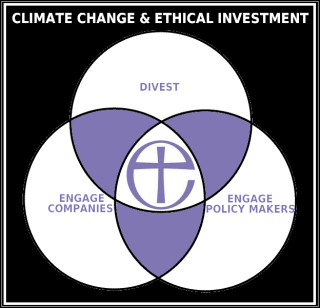
On Thursday April 30th 2015, the Church of England, mother church of the world’s 80 million Anglicans, adopted a new climate change and ethical investment policy. The policy stresses engagement with companies and policy makers and divestment when engagement is deemed unproductive.

The Church Commissioners and The Church of England Pensions Board indicated that it will divest £12 million ($18.42 million) from thermal coal and tar sands. Effective immediately the three national investing bodies (NIBs) which includes the £1.9 billion ($2.9 billion) CBF Church of England funds, will not make any direct investments in companies where more than 10 percent of its revenues are derived from the extraction of thermal coal or the production of oil from tar sands.

The new measures are designed to help the church transition to a low carbon economy. The Church already holds significant low carbon investments. Nearly 4 percent of the Commissioners’ portfolio is invested in sustainable forestry, and the Commissioners are the largest private owner of UK forestry.

Tom Joy, Director of Investments at the Church Commissioners, said: “We want to be at the forefront of institutional investors seeking to address the challenge of energy transition. This will predominantly be achieved through strategic engagement, as seen by recent shareholder resolutions at Shell and BP. But this new policy rightly goes beyond to incorporate investment exclusions for companies focused on the highest carbon fossil fuels where we do not think engagement would be productive.”

The new climate change policy was recommended by the Church’s Ethical Investment Advisory Group (EIAG) in response to the motion that came to General Synod from Southwark Diocese in February 2014.

As explained by The Rev Canon Professor Richard Burridge, Deputy Chair of the EIAG and lead on the EIAG’s theological process, “Climate change is already a reality. From an ethical perspective the focus of the investing bodies must be on assisting the transition to a low carbon economy. The Church has a moral responsibility to speak and act on both environmental stewardship and justice for the world’s poor who are most vulnerable to climate change. This responsibility encompasses not only the Church’s own work to reduce our own carbon footprint, but also how the Church’s money is invested and how we engage with companies.”

The primary focus of the new policy is on more intensive engagement. This includes companies with significant greenhouse gas emission in which the NIBs hold shares (fossil fuel producers, electricity generation utilities, large energy users and producers of energy-intensive products).

Bishop Nick Holtam, the lead Bishop on the environment at the Church of England, called climate change “the most pressing moral issue in our world,” he said that the new policy, “marks the start of a process of divestment as well as engagement with fossil fuel companies and better aligns the Church’s investment practice with its belief, theology and practice.”

The new policy commits the NIBs to intensify engagement not only with companies but also with policy makers. Pierre Jameson, Chief Investment Officer of the Church of England Pensions Board said: “We want a global policy framework that incentivises a reduction in carbon emissions and the transition to a low carbon
economy. We need governments meeting in Paris at the end of this year to agree long term global emissions targets with a clear pathway to a low carbon future.”

The policy also highlights the importance of integrating the risks associated with climate change into investment decision making, in line with the NIBs’ commitments under the UN-backed Principles for Responsible Investment. It also includes a commitment to regularly review.

In addition to fund allocation based on climate risk assessments green investments are being given special attention. James Bevan, Chief Investment Officer at CCLA, which is majority owned by the CBF Church of England Investment Fund, said: “We have been carefully analysing the investment risks associated with climate change. Our flagship multi-asset funds are underweight fossil fuels, and we currently have similar sized allocations to low carbon investments like energy efficiency and green infrastructure.”

Edward Mason, Head of Responsible Investment for the Church Commissioners, said: “This is one of the most comprehensive policy frameworks on climate change adopted by any institutional investor. This is not about divestment v engagement. This policy talks to how institutional investors committed to ethical and responsible investment can integrate climate change considerations into their thinking and investment strategy. This is an evolving space. We want to continue to collaborate with others to play our part in the transition towards a low carbon economy and low carbon investing.”

Click here for the advisory paper which provides details of the new climate change and ethical investment policy.


Discover more from Change Oracle

Subscribe to get the latest posts sent to your email.

Share
Previous Post

Extreme Weather is Already Here and Will Get Worse

Next Post

Heat Records Tell the Story of Climate Change

Change Oracle

Change Oracle

Richard Matthews is a researcher, writer, journalist, consultant, and change activist. He has published thousands of articles and contributed to reports for policymakers including a United Nations Environment Program (UNEP) publication. His critical, interdisciplinary analyses have been cited by a wide array of academic publications. His research interests include carbon removal, nuclear power, and disinformation. He is currently spearheading Change Oracle’s Polycrisis Project (COPP).

Related Posts

The War on Science Is a War on Reality

by Change Oracle
October 5, 2026
0

Science is supposed to be one of the places where political power stops. A president can make a claim, a political party can promote an ideology, a billionaire can fund...

trump voter suppression

Trump’s Voter Suppression Machine is Rigging the 2026 Midterm Elections

by Change Oracle
August 31, 2026
0

The greatest threat to election security is not coming from Russia, China or Iran, it is coming from within the Whitehouse. U.S. President Donald Trump has leveraged the powers of...

climate change and heat waves in the summer 2026

Unrelenting Global Heat: How Rising Temperatures Are Collapsing Terrestrial and Marine Ecosystems

by Change Oracle
July 20, 2026
0

The trajectory of planetary heating has escalated at an alarming rate, transforming what were once considered extreme anomalies into a harrowing baseline reality. With greenhouse gas emissions continuing to rise,...

Next Post

Heat Records Tell the Story of Climate Change

Leave a Reply Cancel reply

Subscribe on Substack

Follow Change Oracle

  • Spotify
  • Facebook
  • LinkedIn
  • YouTube
  • Instagram
  • TikTok
  • Email

Podcasts

American Politics

The War on Science Is a War on Reality

by Change Oracle
October 5, 2026
0

Science is supposed to be one of the places where political power stops. A president can make a claim, a...

Read moreDetails
trump voter suppression

Trump’s Voter Suppression Machine is Rigging the 2026 Midterm Elections

August 31, 2026
climate change and heat waves in the summer 2026

Unrelenting Global Heat: How Rising Temperatures Are Collapsing Terrestrial and Marine Ecosystems

July 20, 2026

The Iran War as a Polycrisis Case Study

June 22, 2026

Chainsaw Governance: What is Behind the Administration’s Purge of Federal Employees

May 4, 2026
  • About
  • Podcasts & Videos
  • Climate Change
  • Energy
  • Business and Economics
  • Politics
  • Technology
  • Social Change
  • Polycrisis
  • Other

© 2024 Copyright Change Oracle.

Welcome Back!

Login to your account below

Forgotten Password?

Retrieve your password

Please enter your username or email address to reset your password.

Log In
No Result
View All Result
  • Polycrisis
  • Business and Economics
    • Leadership
    • Supply Chains
  • Economics
  • Energy
    • Renewables
    • Nuclear Power
    • Fossil Fuels
  • Climate Change
    • Greenhouse Gas Emissions
    • Biodiversity
    • Extreme Weather
  • Investing
  • Politics
    • American Politics
    • Canadian Politics
    • International Politics
  • Technology
    • Buildings & Infrastructure
    • Carbon Capture
    • Food
    • Transportation
  • Social Change
    • Education
    • Activism
    • Psychology

© 2024 Copyright Change Oracle.

Discover more from Change Oracle

Subscribe now to keep reading and get access to the full archive.

Continue reading

Discover more from Change Oracle

Subscribe now to keep reading and get access to the full archive.

Continue reading